

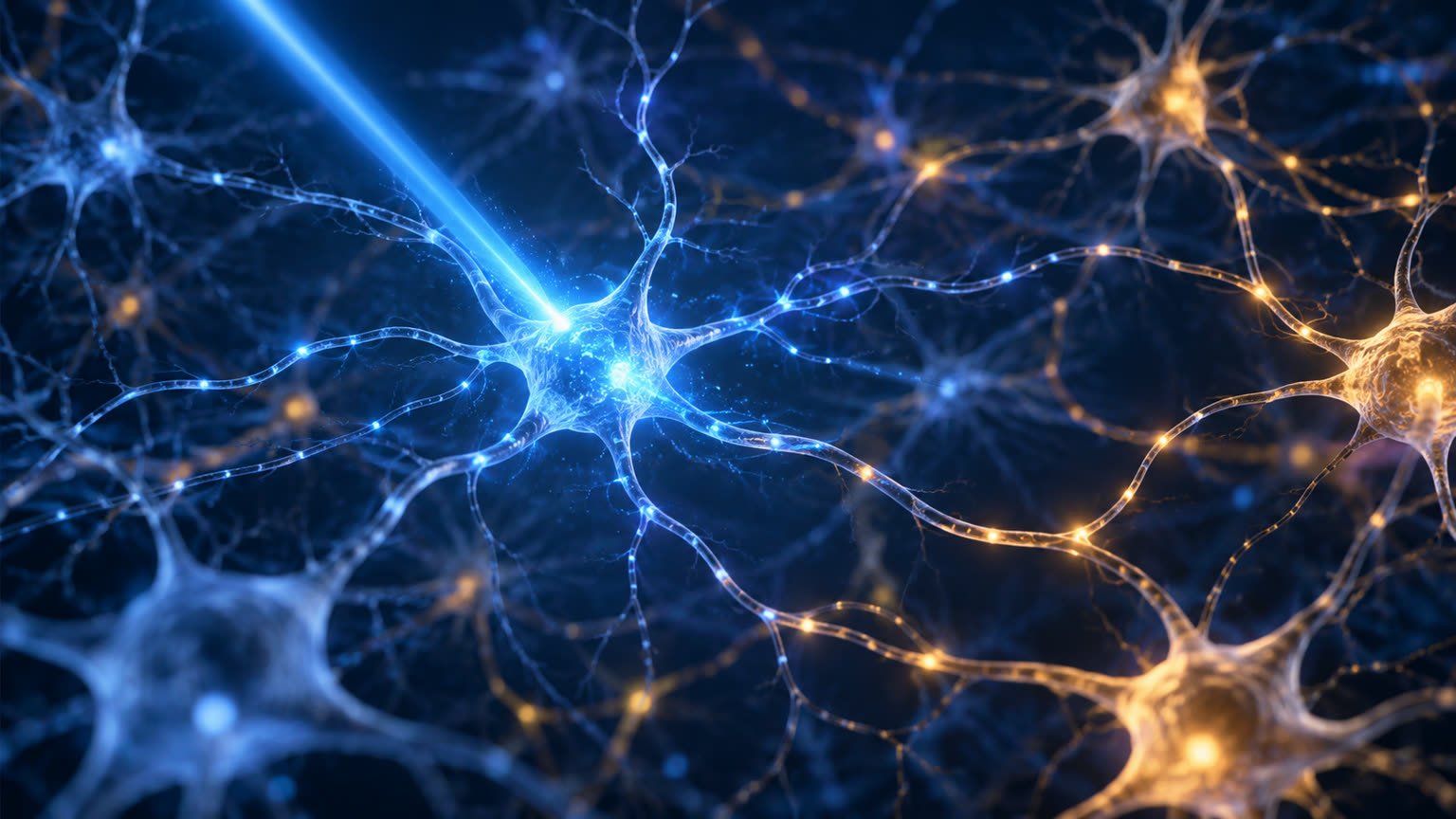
Peter Hegemann, Georg Nagel and Karl Deisseroth have been awarded the 2026 Nobel Prize in Physiology or Medicine for discoveries that led to optogenetics, the Nobel Assembly at Karolinska Institutet announced on 5 October.
Optogenetics gives researchers a way to use light to switch the activity of selected nerve cells on or off in a living brain. That precision helps scientists test how particular neural circuits contribute to memories, feelings and behaviour, rather than only observing correlations.
Hegemann and Nagel identified the light-sensitive protein channelrhodopsin in a single-celled alga. Deisseroth later adapted the discovery so light could trigger signals in nerve cells, helping establish the experimental method now used in neuroscience laboratories.
The prize recognises a research tool, not a generally available treatment. Karolinska Institutet says scientists are exploring possible clinical applications, including efforts to restore sight, but such work should not be taken as a proven therapy for neurological or psychiatric conditions.
Source: Karolinska Institutet, 5 October 2026. Cross-check: Stanford University, 5 October 2026.
Illustration disclosure: The featured image is an AI-generated editorial concept of light interacting with nerve cells. It is not a photograph, microscopy image or record of an actual experiment.